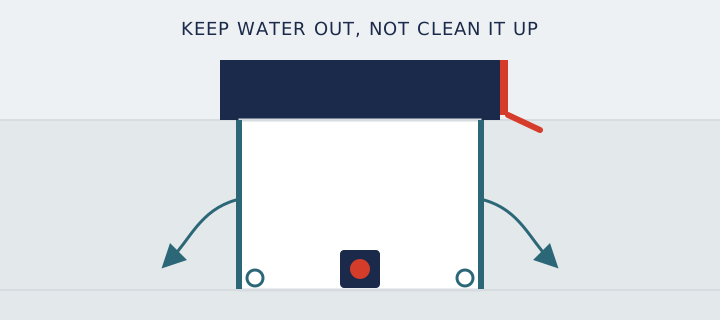
Basement waterproofing and water damage restoration solve two different problems, at two different points in time. Waterproofing is preventive: it's the work that keeps groundwater and surface water from getting into your basement in the first place, things like an interior drain tile and sump pump system, exterior excavation and membrane work, or crack injection. Water damage restoration happens after water has already gotten in: extracting it, drying out the space, and preventing mold. They're handled by different specialties, too. Waterproofing is typically done by a foundation or specialty waterproofing contractor. Restoration is done by an IICRC-certified restoration crew. If your basement is flooding right now, you need restoration first. If it keeps flooding again and again, waterproofing is the fix for the pattern, not any single flood.
Two Different Jobs, Solving Two Different Problems
It's a common point of confusion, especially for a homeowner dealing with a repeat basement flooding problem: is this a waterproofing issue or a restoration issue? The honest answer is usually both, just at different moments. Waterproofing is about keeping water out before it ever becomes a problem. Restoration is about cleaning up after it already has. A house can need one without the other. A basement that floods for the first time during a major storm needs restoration now and might benefit from waterproofing later. A chronically damp basement that hasn't technically "flooded" yet but has a musty smell and efflorescence on the walls might need waterproofing before restoration is ever necessary.
How Basement Waterproofing Actually Works
Waterproofing methods generally fall into a few categories, and a specialty contractor typically recommends one based on the specific source of the water:
- Interior drain tile and sump pump systems collect groundwater at or below the footing level along the interior perimeter of the basement, and route it to a sump pit where a pump ejects it away from the house. This is generally the less invasive and less expensive category of the two main approaches, since it doesn't require excavating around the outside of the home.
- Exterior waterproofing combines surface controls, like directing gutters and downspouts away from the foundation and grading the yard properly, with subsurface measures like drainage board and a waterproof membrane applied to the outside of the foundation wall, usually requiring excavation. Building science research notes that retrofitting exterior waterproofing after a home is already built is considerably more disruptive and expensive than installing it during original construction, since it requires digging up landscaping around the entire foundation.
- Vapor barriers manage moisture that diffuses through the foundation wall itself rather than bulk water intrusion, and are placement-sensitive: installing the wrong type in the wrong spot on a below-grade wall can trap moisture inside a wall cavity instead of keeping it out, which defeats the purpose entirely.
- Crack injection seals specific cracks in a foundation wall directly. Epoxy injection is used when the crack needs structural reinforcement, since it bonds nearly as strong as the surrounding concrete. Polyurethane injection is used mainly to stop an active water leak through a crack, since it's flexible and accommodates the concrete's natural movement, though it adds little structural strength on its own.
Cost-estimating sites put average basement waterproofing costs somewhere around $2,500 to $8,000 depending heavily on whether the work is interior (generally cheaper, often in the $1,200 to $2,500 range for a sump system alone) or exterior (generally pricier, since it involves excavation). These are cost-aggregator estimates, not government or insurer-published figures, and actual pricing depends entirely on the specific home and contractor.
Why This Is a Different Contractor Than Your Restoration Crew
Ohio's state contractor licensing board licenses only a handful of specialty trades statewide (electrical, HVAC, plumbing, hydronics, and refrigeration) — basement waterproofing and foundation repair aren't among them, which is part of why this work is generally handled by contractors organized around their own trade association rather than a state restoration or plumbing license. Water damage restoration, by contrast, is organized around the IICRC's S500 standard and its own certifications. The two trades exist because they solve genuinely different problems: one is a below-grade construction and drainage specialty, the other is an emergency-response and drying specialty. A company that's excellent at one isn't necessarily equipped for the other.
Is Waterproofing Covered by Insurance?
Generally, no. Standard homeowners insurance covers sudden, accidental damage from a covered cause, not preventive home improvements. Waterproofing is typically treated the same way as other home improvements that happen to reduce future risk, similar to how replacing an aging roof before it fails isn't a covered claim even though it prevents a future one. That said, the restoration work that follows an actual flood, extracting the water and drying out the basement, is often covered under a standard policy if the cause itself is one your policy recognizes. See ClearFlow's guide on whether insurance covers a flooded basement in Ohio for the specifics on what typically is and isn't covered.
Vetting a Waterproofing Contractor
Because waterproofing isn't a state-licensed specialty in Ohio the way plumbing or electrical work is, a little extra diligence matters before signing a contract. Check the company's record with the Ohio Attorney General's office and the Better Business Bureau before paying anything, get the full scope of work in writing, and be cautious of high-pressure sales tactics or requests for a large deposit upfront. Ohio's Attorney General has previously brought action against at least one basement-waterproofing company for taking customer deposits without completing the promised work, which is a useful reminder that this specific trade has drawn real consumer-protection attention in the state. See ClearFlow's guide on how to choose a water damage restoration contractor in Ohio for similar vetting steps that apply just as well here.
If You're Dealing With Both Right Now
If your basement is actively flooded today, restoration comes first, always. Extracting standing water and drying the space properly needs to happen quickly regardless of what caused it, since mold can begin developing within 24 to 48 hours in the right conditions. Once the space is confirmed dry, that's the right moment to bring in a waterproofing contractor to diagnose why it flooded and install a permanent fix, rather than drying it out and hoping the same storm doesn't do the same thing again next season. See ClearFlow's annual water damage prevention checklist for the broader maintenance picture beyond waterproofing specifically.
If your basement has water in it right now, ClearFlow Restoration's dispatch line connects you to a licensed, IICRC-certified restoration crew, 24/7, to start extraction and drying immediately.
📞 Call (419) 588-0112Frequently Asked Questions
Does ClearFlow do basement waterproofing?
No. ClearFlow's dispatch line connects callers to water damage restoration crews, who clean up and dry out damage after water has already gotten in. Basement waterproofing, sump pump and drain tile installation, exterior membrane work, and crack injection are handled by a separate specialty, waterproofing or foundation contractors, not restoration companies.
My basement keeps flooding. Do I need waterproofing or restoration?
Both, usually in that order after the current flood. Call a restoration crew first to extract the water and dry the space out properly. Once it's dry, a waterproofing contractor can assess why it flooded and install a permanent fix, like an interior drain tile and sump system, so it doesn't happen again.
Is basement waterproofing covered by homeowners insurance?
Generally, no. Standard homeowners insurance covers sudden, accidental damage, not preventive upgrades. Waterproofing is typically treated as a homeowner-funded improvement, similar to how routine maintenance isn't a covered loss, even though it can prevent future covered losses.
What's the difference between interior and exterior waterproofing?
Interior waterproofing manages water after it's already at the foundation wall, typically with an interior drain tile system and sump pump that collects water and pumps it away. Exterior waterproofing tries to stop water from reaching the wall at all, using excavation, drainage board, and a waterproof membrane on the outside of the foundation. Interior systems are generally less invasive and less expensive; exterior systems address the water earlier but usually cost more and involve digging around the foundation.
How do I avoid getting scammed by a waterproofing contractor?
Check the company's record with your state attorney general's office and the Better Business Bureau before paying anything, get the scope of work in writing, and be wary of high-pressure sales tactics or large upfront deposits. Ohio's Attorney General has taken enforcement action against at least one basement-waterproofing company for taking deposits without delivering the promised work.