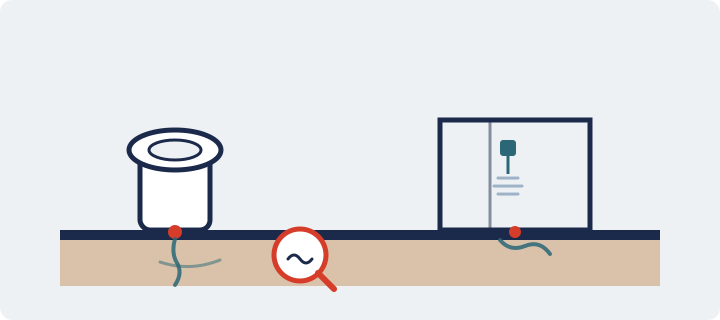
Three parts of a bathroom cause the most hidden water damage: the wax ring under a toilet, the waterproof pan liner under a shower or tub, and the supply lines feeding your fixtures. All three can leak for weeks or months without any visible standing water, because the water goes down into the subfloor or through the ceiling below instead of pooling where you'd notice it. The tells are a rocking toilet, a musty smell near the shower, hollow-sounding or darkening tile, and soft or discolored flooring — catch any of those early and you're usually looking at a repair measured in hundreds of dollars, not a full subfloor replacement.
The Toilet Wax Ring: Small Part, Big Consequences
The wax ring is the gasket sealing the base of the toilet to the floor drain flange, and when it's properly installed, it can genuinely last the life of the toilet, twenty years or more. Wax rings rarely fail from simple age. They fail because the toilet itself starts rocking, usually from loose mounting bolts or a flange that sits slightly off-level, and that rocking motion gradually shears the wax seal instead of leaving it intact. Once the seal breaks, a small amount of water escapes with every flush, straight down into the subfloor beneath the toilet.
Watch for water pooling around the base after a flush, a sewage-like odor that wasn't there before, a toilet that shifts or feels unstable when you sit down, and — the giveaway that usually means damage has already started — a soft, spongy, or discolored spot on the floor around the base. Replacing a wax ring runs $50 to $200 in parts and labor, cheap compared to what happens if a rocking toilet keeps shearing a new seal every few months while nobody looks at the subfloor underneath.
Shower Pans: The Leak You Can't See Happening
A shower pan liner sits beneath the tile and mortar bed of a tiled shower floor, and its entire job is to catch any water that gets past the tile and funnel it to weep holes in the drain. When that liner cracks or was installed with a gap, water doesn't pool visibly on the shower floor the way a toilet leak does — it soaks straight down into the subfloor, or through to a ceiling below if the bathroom is upstairs. That's exactly why shower pan leaks are so hard to catch early: by the time you notice anything, the water has usually been finding its way in for a while already.
The signs to check for: tiles that sound hollow or feel loose when you press on them, grout that's darkening or cracking faster than it should, a persistent musty smell that lingers even after the bathroom fan runs, and — if your bathroom is on an upper floor — a water stain or soft patch on the ceiling directly below the shower. Repair cost depends entirely on how far it's gotten. A minor patch, caught early, can run as little as $10 to $30. A full pan replacement, which usually means demoing the tile to get at the liner, typically runs $900 to $3,500, averaging around $1,620, with additional plumbing work sometimes adding more on top of that.
| Source | Typical Repair Cost |
|---|---|
| Wax ring replacement | $50 – $200 |
| Shower pan patch (caught early) | $10 – $30 |
| Full shower pan replacement (tile demo) | $900 – $3,500 |
| Supply line replacement, per line | Typically under $50 in parts |
Supply Lines: The Part Everyone Forgets to Replace
The small flexible hoses feeding your toilet, sink, and washing machine are easy to forget about entirely, since they're rarely visible and almost never fail dramatically until the moment they do. An industry study of washing machine hose failures examined 525 actual insurance claims and found that roughly 55% were caused by supply hose failure, with an average failed-hose age of 8.7 years — more than half had failed by year 8, and close to 80% by year 10. That's the reasoning behind the common recommendation to replace supply lines every 3 to 5 years regardless of material, and to choose braided stainless steel over plain rubber, since rubber hoses crack and degrade with age in a way braided stainless resists better, though no material is entirely immune to failure.
Check under sinks and behind the washing machine for any bulging, rust-colored residue, or fraying on the braided sheathing, and replace on sight rather than waiting for a clear failure. A new supply line costs a few dollars to under fifty; a burst one behind a washing machine, running unnoticed for hours, does not.
Is This Covered by Insurance?
Usually, if the failure was sudden. A wax ring that shears and starts leaking, or a supply line that bursts, is generally treated as sudden, accidental water damage, the kind a standard homeowners policy covers. What insurers push back on is damage from gradual, long-term seepage — water that's clearly been finding its way in for months, which a reasonable homeowner arguably should have caught sooner. That distinction is part of why catching these signs early matters for more than just your repair bill; it can matter for whether a claim gets paid at all. See ClearFlow's guide on why insurance companies deny water damage claims for how insurers draw that line in practice.
What to Do If You Find Active Damage
If you've already found soft subfloor, a ceiling stain, or standing water traced back to one of these sources, the leak itself needs to be stopped first, by a plumber if it's still active, before any drying or repair work makes sense. Once the source is controlled, the wet subfloor, drywall, or ceiling needs proper drying, not just a fan pointed at it for a weekend, since trapped moisture behind tile or under flooring can keep feeding mold growth long after the surface looks dry. See ClearFlow's guide on what structural drying actually involves for what a proper dry-out looks like versus what doesn't work.
Found soft flooring, a ceiling stain, or a musty smell you can't explain? If it's turned into real water damage, ClearFlow Restoration's dispatch line connects you to a licensed, IICRC-certified crew serving your part of Ohio, 24/7.
📞 Call (419) 588-0112Frequently Asked Questions
How do I know if my toilet's wax ring is failing?
Water pooling around the base after flushing, a sewage-like odor near the toilet, a toilet that rocks or feels unstable when you sit down, and soft or discolored flooring around the base are the main signs. A properly installed wax ring can last decades, so a failure often traces back to a loose toilet shearing the seal over time rather than the wax simply wearing out.
Why are shower pan leaks so hard to notice?
A shower pan liner sits underneath the tile, so when it fails, water seeps directly into the subfloor or the ceiling below rather than showing up as standing water on the shower floor. By the time you notice hollow-sounding tile, a musty smell, or a stain on the ceiling below, the leak has often been running for a while.
How often should supply lines be replaced?
A common industry recommendation is every 3 to 5 years regardless of material, and immediately at the first sign of bulging or rust on a rubber hose, or fraying on a braided stainless line. An industry study of washing machine hose failures found the average failed hose was 8.7 years old, with more than half failing by year 8.
How much does it cost to fix a failed wax ring or shower pan?
A wax ring replacement typically runs $50 to $200 for parts and labor. A shower pan repair varies enormously depending on whether it's a simple patch or a full pan replacement requiring tile demolition — patch kits run $10 to $30, while a full pan replacement typically runs $900 to $3,500, averaging around $1,620, with additional plumbing work sometimes adding more.
Is bathroom water damage from these sources covered by insurance?
Usually, if the leak is sudden and accidental. Standard homeowners policies generally cover a sudden pipe or seal failure, but they typically exclude damage from gradual, long-term seepage the homeowner reasonably should have caught, which is part of why catching these leaks early matters for your claim, not just your repair bill.