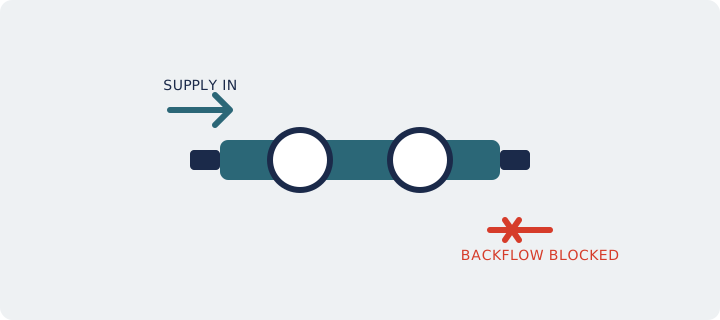
Backflow testing checks that a valve called a backflow preventer is actually stopping water from flowing backward into the clean public water supply. Most single-family homes don't have one and don't need one — it's mainly required for properties with an irrigation system, a fire sprinkler line, a boiler loop, or certain commercial connections. If your property does have one, most Ohio water utilities require it to be tested annually by a certified tester, and skipping that can lead to a water service disconnection notice. This guide isn't about ClearFlow's core service, but it connects to it in one specific way: these devices are mechanical, they can leak or fail, and when they do, they're usually sitting in a basement or mechanical room where that failure turns into real water damage.
What Is Backflow, and Why Does It Matter?
Backflow is what happens when water in a plumbing system reverses direction and flows the wrong way — back into the clean public water supply instead of out of it. Normally that can't happen, because supply pressure keeps water moving one direction. But a sudden pressure drop (a water main break, heavy firefighting draw nearby, a utility repair) can momentarily reverse that flow, and if your property's plumbing is connected to anything that could contaminate water — an irrigation system that draws from a pond, a boiler loop with chemical additives, a commercial process line — that reversal can pull contaminated water back into the drinking water system. A backflow preventer is the valve installed specifically to stop that from happening.
Do You Actually Need a Backflow Preventer?
Most ordinary single-family homes without any of the connections below don't have a backflow preventer installed at all, and don't need to arrange testing for one. You likely do have one, and do need annual testing, if your property has:
- An in-ground lawn irrigation system
- A fire sprinkler suppression system
- A boiler or hydronic heating loop with chemical treatment
- A swimming pool filled from the household supply with certain connection types
- A well or secondary water source cross-connected with the public supply
Restaurants, salons, medical and laboratory facilities, and manufacturing plants are also commonly required to have one, since they represent a higher contamination risk to the shared water supply.
Who's Required to Test, and How Often
Backflow testing in Ohio is administered locally by each water utility, not by one single statewide schedule — so the exact process and paperwork differ depending on which city or water authority serves your property. That said, annual testing (once every 12 months) is the norm across the utilities that publish requirements, and the device has to be tested by a certified tester, not just anyone with plumbing experience. Under Ohio Revised Code 3703.21, technicians who install, test, or repair isolation backflow prevention devices must be certified through the state's Division of Industrial Compliance. Your local water utility can typically point you to certified testers serving your area.
What Happens If You Skip Testing or Your Device Fails
Ohio water utilities generally treat a lapsed or failed backflow test as a real compliance issue, not a paperwork formality, because the underlying risk is public health, not just your own property. Enforcement typically escalates in stages: a notice that testing is due, a follow-up warning if it lapses, and ultimately a disconnection of water service to the property if the device still isn't tested or repaired within the required window. This isn't a scare tactic specific to any one city — it reflects how seriously utilities treat cross-connection control generally, since contaminated backflow can pose a genuine illness risk to the broader water system, not just the property where it happens.
When a Failed Backflow Preventer Causes Water Damage
Here's the part that actually connects to what ClearFlow does. A backflow preventer is a mechanical assembly with moving parts, seals, and check valves, and like any mechanical valve, it can leak, corrode, or fail outright over time — sometimes gradually, sometimes all at once. These devices are almost always installed in a basement, a mechanical room, or a utility closet, which are exactly the kinds of enclosed, low-traffic spaces where a leak can run for hours or days before anyone notices standing water, warped flooring, or a damp smell. A failed backflow preventer isn't just a compliance problem at that point, it's an active water damage event, and it needs the same fast response any other water intrusion does.
Backflow Tester vs. Restoration Crew — Who Do You Actually Call?
These are two different problems with two different people to call, and it's worth being clear about which is which. If your backflow preventer failed a test, needs certification, or needs repair or replacement as a working part, that's a job for a certified backflow tester or licensed plumber — not a restoration crew, and not ClearFlow. If that same failed device has already leaked and caused water damage to your basement, mechanical room, or the flooring and drywall around it, that's when a restoration crew comes in — assessing and drying the affected area, the same as any other water damage event. ClearFlow's dispatch line connects Ohio homeowners to licensed, IICRC-certified crews for exactly that second situation.
If a failed backflow preventer or any other plumbing failure has already caused water damage in your Ohio home, ClearFlow Restoration's dispatch line connects you to a licensed, IICRC-certified crew, 24/7.
📞 Call (419) 588-0112Frequently Asked Questions
What is backflow testing?
Backflow testing checks that a backflow preventer, a valve that stops water from flowing backward into the clean public water supply, is working correctly. A certified tester checks the device and reports the result to your local water utility, typically once a year.
Do I need backflow testing for my house?
Most single-family homes without an irrigation system, fire sprinkler system, boiler loop, or similar connection don't have a backflow preventer at all and aren't required to test one. If your home has an irrigation system or a fire suppression line, you likely do have a device that needs annual testing.
How much does backflow testing cost?
It varies by tester, device type, and location, since testing is arranged privately with a certified tester rather than priced by the water utility. Contact a local certified backflow tester or plumber for an actual quote.
What happens if I don't get my backflow tested?
Most Ohio water utilities send escalating notices for a lapsed or failed test, and can ultimately disconnect water service to the property if the device isn't tested or repaired within the required timeframe. Requirements and timelines vary by local utility.
Can a failed backflow preventer cause water damage?
Yes. Backflow preventers are mechanical valves that can leak or fail outright, and they're usually installed in basements, mechanical rooms, or utility closets — exactly the kind of enclosed space where a leak can go unnoticed and cause real water damage before anyone spots it.
Who tests backflow devices in Ohio?
Testing and repair of isolation backflow devices must be performed by a technician certified under Ohio Revised Code 3703.21. Your local water utility can typically provide a list of certified testers in your area.