A sewage backup is not the same emergency as a flooded basement, and treating it that way is how people get sick. Here's what actually matters in the first hour, and what happens after.
Why this is different from regular water damage
Restoration professionals classify water damage into three categories, and sewage backup is almost always Category 3 — meaning grossly contaminated water that can contain bacteria, viruses, and parasites. That's a very different situation than a clean burst pipe. It's not just unpleasant, it's a genuine health hazard, and it's why professionals treat it with full protective equipment rather than a mop and a pair of rubber gloves.
What to do immediately
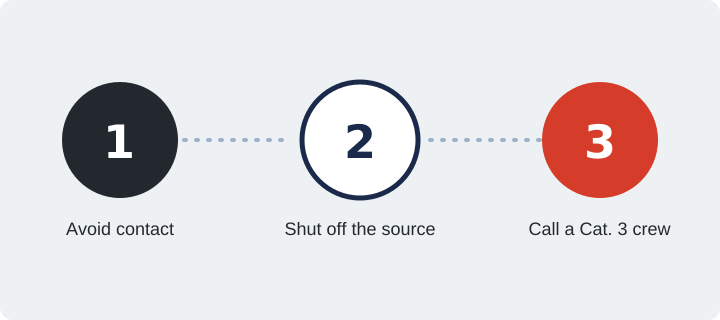
Don't touch it directly. Skip the instinct to start mopping or wading in. If you must be near it, wear rubber boots and gloves at minimum, and avoid any contact with open cuts or your face.
Stop using water in the house if you can. Running sinks, toilets, or washing machines can make a backup worse if the blockage is in your main line, since that water has nowhere to go but back up.
Ventilate if it's safe to do so. Open windows if the weather allows. Sewage off-gassing isn't something you want concentrated indoors.
Keep kids and pets away from the affected area entirely, not just away from standing water. Airborne particles and residue on surfaces are part of the risk too.
Photograph everything before cleanup starts. Insurance claims for sewage backup often hinge on documentation, and it's much easier to prove damage before anything's been touched.
What NOT to do
Don't try to DIY-clean a real sewage backup the way you might handle a small basement leak. Regular cleaning products aren't rated for Category 3 contamination, and without proper containment, you risk spreading contaminated material into unaffected parts of the house through foot traffic and airflow.
The insurance question
Sewage backup is usually excluded by default from standard homeowners policies in Ohio. It's typically sold as a separate, inexpensive rider — often $50 to $100 a year — and if you don't already have it, this is exactly the situation where you'll wish you did. Worth calling your agent after this to check, even if this particular claim doesn't qualify.
What causes it
A few common culprits: tree roots infiltrating and cracking sewer lines, aging municipal infrastructure backing up during heavy rain, grease and solid buildup narrowing pipes over years, and, less often, a blockage specific to your own home's line. Heavy rainfall overwhelming a combined sewer system is a particularly common trigger in older Ohio cities with aging infrastructure.
Getting it handled
Because of the health risk, sewage backup cleanup isn't a job for regular handyman-style repair — it needs crews trained and equipped for Category 3 water.
Why Category 3 Water Is Handled So Differently
The IICRC's S500 standard — the industry reference restoration professionals are trained and certified against — defines Category 3 water as grossly contaminated water that can contain pathogenic, toxigenic, or other harmful agents capable of causing significant illness if contacted or consumed. Sewage backups, along with flooding from rivers, seawater, and rising groundwater, all fall under this classification by definition, regardless of how the water looks. This is exactly why professional cleanup for a sewage backup looks nothing like cleanup for a clean supply-line leak: it's not a judgment call about how bad it looks, it's a fixed classification with fixed handling requirements.
What Actually Gets Removed vs. Cleaned
With Category 3 contamination, porous materials that absorbed the water — carpet and padding, drywall up to the waterline, insulation, upholstered furniture — generally can't be safely cleaned and saved. The contamination sits inside the material itself, not just on the surface, so the standard practice is removal and replacement rather than disinfection and drying. Hard, non-porous surfaces like tile, sealed concrete, and metal can typically be cleaned and disinfected in place. This is a meaningfully different scope of work — and cost — than a Category 1 clean-water event of the same size, which is worth knowing before you're surprised by an estimate.
Health Symptoms Worth Taking Seriously
Direct or airborne exposure to sewage-contaminated water can cause gastrointestinal illness, skin and eye irritation, and respiratory symptoms, particularly in children, older adults, and anyone with a compromised immune system or existing respiratory condition. If anyone in the household develops symptoms after a sewage backup — even mild ones — it's worth mentioning the exposure to a doctor rather than treating it as an unrelated coincidence.
The Insurance Timeline Matters Here Too
Because sewage backup coverage is typically a separate rider rather than automatic, and because the cleanup itself often needs to start before a claim is fully processed given the health risk of delay, documentation becomes even more important than with a standard water claim. Photograph the affected area thoroughly before any cleanup begins, including the apparent source if visible, and keep any receipts for emergency mitigation steps you take before a crew arrives — most policies that do cover backup will reimburse reasonable emergency measures taken to prevent further damage.
Preventing the Next One
If this wasn't a one-time fluke — meaning your home has older sewer lines, mature trees with roots near the line, or you've had a prior backup — a sewer line camera inspection can identify problems like root intrusion or pipe deterioration before they cause a repeat event. A backwater valve, which allows sewage to flow out but not back in, is also a worthwhile investment for homes with a history of backups, particularly in older Ohio neighborhoods with combined sewer systems that see periodic overflow during heavy rain.
If you're dealing with a sewage backup right now in Ohio, ClearFlow Restoration connects you with licensed, IICRC-certified crews equipped to handle contaminated water safely, and many work directly with your insurer on documentation.
📞 Call (419) 588-0112