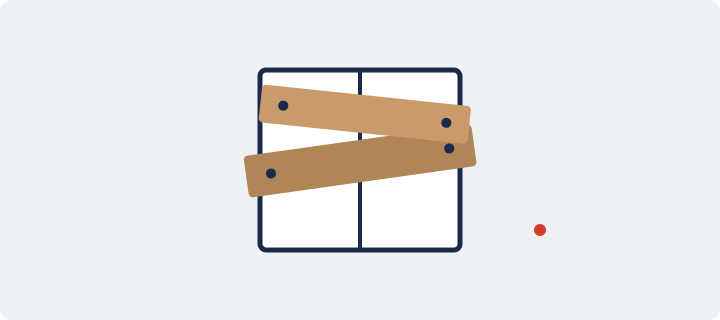
Emergency board-up secures broken windows, doors, or roof openings after a storm or fire, using exterior-grade plywood or tarping, so the property stops taking on more damage from weather or intrusion. A single window typically runs $75 to $300, a full residential job with several openings often falls between $400 and $1,500, and most homeowners insurance covers it as emergency mitigation rather than a separate out-of-pocket expense. It's usually one of the very first things a restoration crew does, before drying or cleanup starts, not a separate service you need to arrange on your own.
What Is Emergency Board-Up, and When Do You Need It?
Board-up is exactly what it sounds like: covering a broken window, door, or roof opening with plywood or heavy tarping so wind, rain, animals, or intruders can't get into the property while it's vulnerable. It comes up most often after two kinds of events. Storm damage — a fallen branch through a window, a section of roof torn off, a door blown off its hinges — creates an opening that needs to be sealed fast, or the next round of rain turns a manageable repair into a much bigger water damage job. Fire damage does the same thing from a different direction: windows commonly crack or shatter from heat, and firefighting efforts sometimes require breaking a window or door for ventilation or access, leaving the same kind of opening behind.
What's Actually Included in a Board-Up Job
A board-up crew typically starts with a quick assessment of every vulnerable opening, then secures each one, usually with 3/4-inch exterior-grade plywood cut to fit and screwed (not nailed) into the frame, so it can be removed cleanly once real repairs happen. Roof openings get tarped and anchored, often with sandbags or a batten system, rather than boarded, since a flat board can't seal an angled roof surface the way a properly secured tarp can. Larger commercial storefronts sometimes use polycarbonate or steel panels instead of plywood for added security. Most crews also photograph the damage as part of the job, which doubles as documentation for your insurance claim.
How Much Does Emergency Board-Up Cost?
| Job | Typical Cost |
|---|---|
| Single window | $75 – $300 |
| Single door | $100 – $400 |
| Residential job, 3–5 openings | $400 – $1,500 |
| Residential job, 6–10 openings | $800 – $2,800 |
| Roof tarping, per 100 sq. ft. | $200 – $800 |
| Storefront / commercial | $1,500 – $8,000+ |
These figures reflect typical industry ranges reported by restoration providers nationally, not a fixed ClearFlow rate — the crew that responds to your call sets its own pricing based on the actual damage and materials needed. Simple jobs at one or two openings tend to land at the low end; anything involving roof tarping or a large commercial storefront pushes toward the higher end fast.
Does Insurance Cover Board-Up?
Usually, yes. Most homeowners policies require you to take "reasonable steps" to prevent further damage after a covered loss, and board-up is treated as exactly that kind of emergency mitigation, the same category as tarping a roof or shutting off water at the main valve. Insurers generally cover it as part of the claim rather than a separate line item that eats into your dwelling coverage. That said, coverage still depends on the underlying cause being covered in the first place — a fire or a covered storm event, not something excluded on your specific policy — so it's worth a quick call to your insurer to confirm, especially if the damage is extensive.
How Fast Can You Get Boarded Up?
Most emergency providers aim to arrive within 30 minutes to a few hours of the call, and a typical residential job, once a crew is on site, takes another 2 to 6 hours depending on how many openings need to be secured and whether roof tarping is involved. Response time matters more here than almost anywhere else in restoration — every hour a window or roof section sits open is another hour of exposure to whatever the weather does next, which is exactly why board-up gets handled first, ahead of drying or cleanup.
Board-Up Company vs. Restoration Crew — Do You Need Both?
In most cases, no — you don't need to make two separate calls. Restoration crews commonly handle board-up themselves as the opening move in an emergency response, then transition straight into drying, smoke and soot cleanup, or fire damage remediation once the property is secured. A dedicated board-up-only company exists mainly for situations where securing the property is the entire job — a vacant property, an insurance-driven vacancy requirement — rather than a step on the way to full restoration. If you're dealing with active storm or fire damage, one call to a restoration crew typically covers both securing the property and starting the rest of the work.
What Happens After the Property Is Secured
Once the openings are boarded or tarped, the property stops getting worse, but the damage that already happened still needs to be addressed. If board-up followed a fire, the next steps are smoke, soot, and water cleanup from firefighting efforts — covered in ClearFlow's guide on what to do immediately after a house fire in Ohio. If it followed a storm, the next question is usually what your policy actually covers — see ClearFlow's guide on storm damage and Ohio insurance coverage for that breakdown.
If you need emergency board-up after a storm or fire in Ohio, ClearFlow Restoration's dispatch line connects you to a licensed, IICRC-certified crew who can secure the property and start the rest of the work, 24/7.
📞 Call (419) 588-0112Frequently Asked Questions
How much does emergency board-up cost?
A single window typically runs $75 to $300, a door $100 to $400, and a multi-opening residential job often falls between $400 and $1,500. Roof tarping usually runs $200 to $800 per 100 square feet. Actual pricing depends on the crew, the extent of damage, and how many openings need to be secured.
Does homeowners insurance cover board-up services?
Usually, yes. Most homeowners policies treat board-up as emergency mitigation, a reasonable step to prevent further damage after a covered loss like a storm or fire, and cover it as part of the claim rather than counting against your dwelling coverage separately.
How fast can someone board up my house?
Most emergency board-up providers aim to arrive within 30 minutes to a few hours of your call, and a typical residential job takes another 2 to 6 hours to complete, depending on how many openings need to be secured and whether roof tarping is also needed.
Do I need a separate board-up company, or does a restoration crew handle it?
In most cases you don't need two separate calls. Restoration crews commonly handle board-up themselves as the first step in an emergency response, before moving into drying, cleanup, or fire damage remediation, so one call typically covers securing the property and starting the rest of the work.
What materials are used to board up a window or door?
Exterior-grade plywood, typically 3/4-inch thick, secured with screws rather than nails so it can be removed cleanly later. Some commercial or higher-security jobs use polycarbonate or steel panels instead.
Is board-up only for storm damage, or does it apply after a fire too?
Both. Board-up is just as common after a house fire, where windows may have broken from heat or firefighting efforts, as it is after storm damage, and it's one of the first things a restoration crew does in either situation to secure the property before cleanup begins.