Don't go back inside until the fire department tells you it's safe — a house that looks fine from the driveway can still have a weakened roof, scorched floor joists, or embers smoldering inside a wall cavity. Call your insurance company the same day, before you touch or throw away anything, and photograph every room exactly as the fire left it. If there's more than light surface soot, or if firefighting hoses soaked the structure (which they almost always do), treat this as a job for a licensed restoration crew, not a weekend project. Soot sets permanently into surfaces within a few days, and the water left behind after the flames are out frequently ends up costing more to repair than the fire damage itself.
Is It Safe to Go Back Inside?
Wait for the fire department to give you a clear all-clear before crossing the threshold, even if the fire looked small or contained to one room. Heat travels through wall cavities and attic spaces in ways that aren't visible from outside, and a roof or floor that held up during the fire can fail hours later once the structure cools and shifts. Firefighters check for exactly this before they let anyone back in, so treat their word as final rather than your own read of the damage.
Air quality is the other reason to stay out. A house fire releases fine particulates that settle everywhere, and homes built before 1980 — common across older Ohio cities like Toledo, Canton, and Lorain — can also disturb asbestos in insulation, tile, or siding when it burns or gets pulled apart during firefighting. If you have asthma, are pregnant, or have young kids or older relatives in the household, wait for a professional read on air quality rather than a quick look and a deep breath. Once you're cleared to re-enter, don't turn on any gas appliance yourself; leave that to the utility company, covered next.
The First Hour After a House Fire
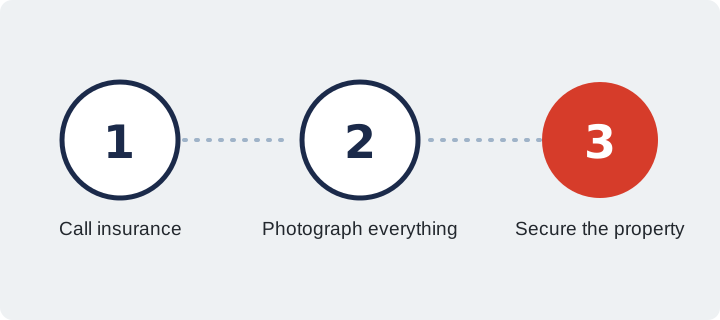
Once you're cleared to be on the property, three things matter more than anything else, and the order isn't arbitrary — each one protects your claim or your safety before you move on to the next.
- Call your insurance company the same day. Most policies require "prompt notice," and waiting even a few days can give an adjuster a reason to question the claim later. You don't need every detail yet — the address, a rough sense of what happened, and a callback number is enough to open the claim and get an adjuster assigned.
- Photograph everything before you touch or clean anything. Walk every room, including ones the fire never reached, and shoot wide shots plus close-ups of anything damaged: charring, soot film, water stains, warped flooring, melted plastic. Insurers use these photos to establish the baseline damage, and once you've cleaned, thrown something out, or started drying a room, that evidence is gone. If you're staying elsewhere, keep the photos backed up somewhere other than just your phone.
- Secure the property. Board up broken windows, tarp any hole in the roof, and lock exterior doors that no longer latch properly. Most homeowner's policies require you to take "reasonable steps" to prevent further damage after a covered loss, and an unsecured house left open to weather or entry can complicate a claim even when the fire itself was clearly covered.
Who to Call, In Order
Fire department first, if you haven't already spoken with them on scene — ask for the incident report number before they leave, since your insurer will ask for it. Insurance company second, same day, per above. Utility companies third: call your gas provider (Columbia Gas of Ohio, Duke Energy Ohio, or your local municipal utility, depending on where in the state you are) and your electric provider before assuming anything is safe to run. Most Ohio utilities will send someone out to inspect and shut off service to a fire-damaged property at no charge, and doing this yourself — flipping a breaker back on to "see if it still works" — risks reigniting something that's still smoldering inside a wall or appliance.
If the fire started from a specific appliance or a wiring issue, hold onto that item or take extra photos of it before it gets moved or thrown out. Fire investigators and your insurance adjuster may both want to see it, and it's much harder to reconstruct after the fact.
Does Homeowners Insurance Cover Fire Damage in Ohio?
Fire is one of the perils covered under a standard HO-3 homeowner's policy, which is what most Ohio homeowners carry, so in the large majority of cases, yes — the structure, your belongings, and the cost of temporary housing while repairs happen are all typically covered, up to your policy limits. What catches people off guard isn't usually whether fire is covered; it's the details: your dwelling coverage limit needs to actually reflect what it costs to rebuild in today's construction market, not what you paid for the house years ago, and personal property is often reimbursed at actual cash value (depreciated) rather than full replacement cost unless you specifically carry a replacement-cost rider.
Additional Living Expenses (ALE) coverage is the part people forget to ask about in the first panicked days — it pays for a hotel, temporary rental, even extra meal costs, while your home is unlivable, and it kicks in as soon as the loss is confirmed, not once repairs are finished. Ask your adjuster about it directly rather than waiting for them to bring it up.
If your insurer denies or lowballs a fire claim, Ohio law gives you real recourse. Ohio Administrative Code 3901-1-54 requires insurers to conduct a timely, good-faith investigation of claims, and the Ohio Department of Insurance accepts consumer complaints directly if you believe that standard wasn't met. See ClearFlow's guide on why insurance companies deny damage claims for the full dispute process, which applies the same way to a denied fire claim.
Smoke, Soot, and Water Damage After a Fire
Here's what surprises a lot of homeowners: in most house fires, the water and smoke do more total damage to the structure than the flames themselves. Fire departments use a lot of water to knock down a fire, and that water goes everywhere — into wall cavities, under flooring, through ceilings into the rooms below the one that actually burned. That water isn't clean, either. It's picked up soot, ash, and whatever was burning on the way down, which typically puts it in the same Category 2 or Category 3 range as sewage backup or flood water under the IICRC's water category framework, meaning it needs professional extraction and disinfection, not just a mop and a fan.
Smoke behaves the same way water does: it finds every gap. HVAC ducting spreads soot and odor to rooms the fire never touched, and porous materials — drywall, insulation, upholstery, carpet padding — absorb smoke particles in a way that gets harder to fully remove the longer it sits. A room with no visible fire damage can still test high for smoke residue and carry a smell that no amount of air freshener resolves, because the odor is embedded in materials, not floating in the air. This is also why "it doesn't look that bad" is one of the least reliable ways to judge fire damage — soot damage and water intrusion are both often worse below the surface than they appear on it.
What NOT to Do After a House Fire
| Don't | Why It Matters |
|---|---|
| Run any electronics or appliances that got wet or were near the fire | Firefighting water and heat can damage internal components in ways that aren't visible; powering something on can cause a short, a fire, or shock |
| Eat food that was exposed to smoke, even sealed food in the pantry | Smoke particles and soot can penetrate packaging seals; discard smoke-exposed food rather than testing it |
| Run your HVAC system before it's inspected | A fire-exposed system will recirculate soot and smoke odor through every vent, spreading contamination to unaffected rooms |
| Assume an undamaged-looking item is actually undamaged | Smoke odor, fine soot, and heat exposure can compromise items with no visible marks; have valuables assessed before storing or using them again |
See ClearFlow's companion guide on what not to do after water damage for the parallel list on the water-damage side of a loss.
DIY Cleanup vs. Calling a Restoration Crew

There's a real line here, and it's worth being honest about where it sits instead of pretending every fire needs a professional crew or that none do. If the damage is genuinely minor — a scorched pan, light surface soot on a hard, non-porous surface like tile or sealed countertop, no firefighting water involved — a homeowner with the right respirator mask, chemical sponges, and a dry-cleaning-safe soot cleaner can often handle it. That's a narrow case, though.
The moment firefighting water was involved, or soot has settled into carpet, upholstery, drywall, or HVAC ductwork, or there's any structural scorching, the math changes. Soot is acidic and continues etching into finishes the longer it sits, and wet building materials left un-dried start growing mold within 24 to 48 hours — a timeline that doesn't wait for a homeowner to finish researching the right cleaning product. This is where ClearFlow's dispatch line exists: it connects callers to a licensed, IICRC-certified restoration crew serving their part of Ohio, and that crew — not ClearFlow itself — handles the actual extraction, drying, and soot remediation. For a fuller checklist on vetting a crew, see ClearFlow's guide on how to choose a water damage restoration contractor in Ohio. If you're not sure which side of the DIY line your situation falls on, calling costs nothing and gets you a real answer from someone who can actually assess the property.
Emergency Resources
If the fire has left your home unlivable, the American Red Cross provides emergency shelter, clothing, and basic necessities to displaced families, typically arriving on scene the same night through local disaster response teams — ask the fire department on-site to help you make contact, or reach out directly through redcross.org. If you believe your insurance company mishandled your fire claim, the Ohio Department of Insurance's consumer services division takes complaints and can intervene on unfair claims-handling practices.
If you're dealing with fire, smoke, or the water damage left behind after firefighting, ClearFlow Restoration's dispatch line connects you to a licensed, IICRC-certified crew serving your part of Ohio, 24/7.
📞 Call (419) 588-0112Frequently Asked Questions
How soon after a house fire can I go back inside my home?
Only once the fire department gives an explicit all-clear. There's no fixed timeline — it depends on the extent of structural damage and how long it takes crews to confirm the building is stable — but re-entering before that clearance risks structural collapse and smoke inhalation from materials still smoldering out of sight.
Does homeowners insurance cover smoke damage even in rooms the fire never reached?
Generally yes. Smoke and soot damage from a covered fire loss is typically covered even in rooms the flames never touched, since smoke migration through HVAC systems and wall cavities is a well-documented part of how fires damage a structure. Document those rooms with the same care as the room where the fire started.
How long does smoke smell typically last after a house fire?
Without professional deodorization, smoke odor can linger for months or longer, because it's embedded in porous materials rather than sitting in the air. Professional restoration uses thermal fogging, ozone treatment, or hydroxyl generators to break down odor at the molecular level — air fresheners and open windows only mask it temporarily.
What should I photograph before I start cleaning up?
Every room, not just the ones with visible fire damage — wide shots of each space plus close-ups of specific damage: char, soot film, water stains, warped or buckled flooring, melted or deformed plastic and electronics. Photograph before moving or discarding anything, since that's the evidence your insurance claim relies on.
Will my insurance pay for a hotel while repairs happen?
If your policy includes Additional Living Expenses (ALE) coverage, which most standard HO-3 policies do, yes — it covers temporary housing, and often extra meal costs, while your home is unlivable. Ask your adjuster about ALE specifically and get it activated early rather than assuming it happens automatically.
Can I clean up smoke and soot damage myself, or do I need a professional?
Very minor, surface-level soot on hard non-porous materials can sometimes be handled with the right protective gear and cleaning products. Anything involving firefighting water, soot on carpet, upholstery, or drywall, HVAC contamination, or structural scorching is a job for a licensed restoration crew — both because of the equipment involved and because delay increases mold risk within 24 to 48 hours.
What's the difference between fire damage and the water damage firefighters cause putting it out?
Fire damage is the direct burning, charring, and heat exposure. Water damage is the secondary damage from the water used to extinguish the fire, which soaks into flooring, drywall, and structural elements and, left untreated, causes warping, staining, and mold — often affecting a larger area of the home than the fire itself did.
How do I find a licensed restoration crew near me in Ohio?
ClearFlow's dispatch line connects callers anywhere across its 22 covered Ohio cities to a licensed, IICRC-certified restoration crew serving their area, based on where you're located. Calling is free and doesn't obligate you to anything — it's simply the fastest way to get a local crew assessing the property.