
Water damage restoration in Ohio typically runs somewhere between $2,000 and $6,000 for a standard job, with a national average around $3,868 — but what actually drives that number is the water category (clean, gray, or black) and how much square footage is affected, far more than which Ohio city you happen to live in. ClearFlow doesn't set pricing itself; the licensed local crew handling your job does, based on their own rates and what they find once they assess the property. What we can tell you, honestly, is what typically drives the number up or down — and the single biggest cost-control factor is how fast you call. Every hour water sits is an hour it spreads further and pushes you closer to mold remediation, which adds an entirely separate cost on top of the water damage itself.
Quick Answer: What Does Water Damage Restoration Cost in Ohio?
| Scope of Damage | Typical Cost Range |
|---|---|
| Minor leak, small area, caught quickly (Class 1) | $150 – $500 |
| Moderate water intrusion, one or two rooms | $1,000 – $4,000 |
| Significant flooding, whole floor or basement | $4,000 – $10,000 |
| Severe/Class 4 damage requiring extensive structural drying | $15,000 – $100,000+ |
These figures reflect national cost data compiled by Angi's and HomeGuide's 2026 pricing guides, cross-referenced against typical restoration industry rates. Ohio pricing generally tracks the national range, since labor and equipment costs for restoration work don't vary as dramatically by state as, say, general contracting does. For ClearFlow's own network-observed cost breakdown by damage scenario, see how much water damage restoration typically costs.
Cost by Water Damage Category (Clean, Gray, Black Water)
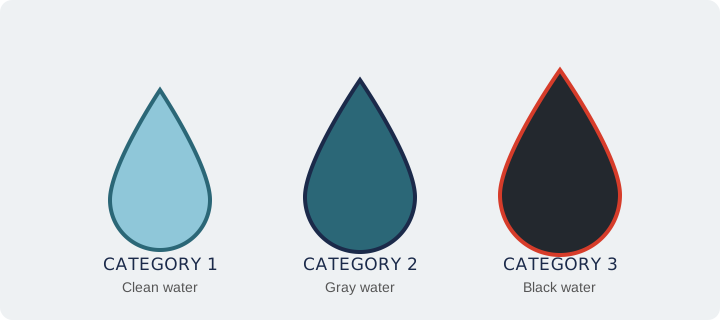
The single biggest driver of your final bill is which category of water you're dealing with, under the IICRC S500 standard's three-tier classification:
| Water Category | What It Means | Typical Cost / Sq. Ft. |
|---|---|---|
| Category 1 (clean water) | A clean source — a supply line break, rainwater intrusion, an overflowing clean appliance | $3.50 – $6 |
| Category 2 (gray water) | Some contamination — washing machine or dishwasher discharge, a toilet overflow with no solid waste | $5.25 – $9 |
| Category 3 (black water) | Grossly contaminated — sewage backup, flooding from outside the home, or water that's sat long enough to grow bacteria | $7.50 – $12+ |
Category matters because it determines what actually has to happen to the affected materials, not just how the water is removed. Clean water damage often allows drywall and flooring to be dried in place and reused. Black water damage almost always requires removing and replacing porous materials — carpet, drywall, insulation — because they can't be sanitized to a safe standard once contaminated. For a full breakdown of what qualifies as Category 3 and why it changes the entire scope of a job, see ClearFlow's guide on black water damage. The same category system ties into the broader Class 1–4 damage classes used to scope a job.
Within any given category, the total square footage affected is what actually multiplies the per-square-foot rate into a final bill, along with how many days of dehumidification the job needs. A 200-square-foot bathroom leak and a 1,500-square-foot flooded basement can both be Category 1 clean water, and still land tens of thousands of dollars apart, simply because one has ten times the area to extract, dry, and monitor. This is also why two quotes for what sounds like "the same kind of damage" can differ — a crew quoting a smaller affected footprint than another crew found isn't necessarily cheaper, it may just be measuring the job differently.
Cost by Severity: A Minor Leak vs. a Fully Flooded Basement
A pinhole leak under a sink that gets caught within a day or two is a fundamentally different job than a basement that took on two feet of water overnight, and the cost difference reflects that. A minor, contained leak might only need extraction from a small area, a few days of targeted drying with a couple of dehumidifiers, and no material replacement at all — often landing under $500.
A fully flooded basement is a different scope entirely: full-room water extraction, industrial dehumidification running for days, removal of soaked drywall and insulation up to the water line, flooring replacement, and — if the water sat for more than 24 to 48 hours before crews arrived — mold remediation on top of the water damage restoration itself. That combination is what pushes flooded-basement jobs into the $4,000–$10,000+ range, and it's also why speed matters more than almost any other factor homeowners can actually control. A basement addressed within hours costs meaningfully less than the identical basement addressed three days later, simply because less material needs to be removed and replaced.
Does Which Ohio City You're In Actually Change the Price?
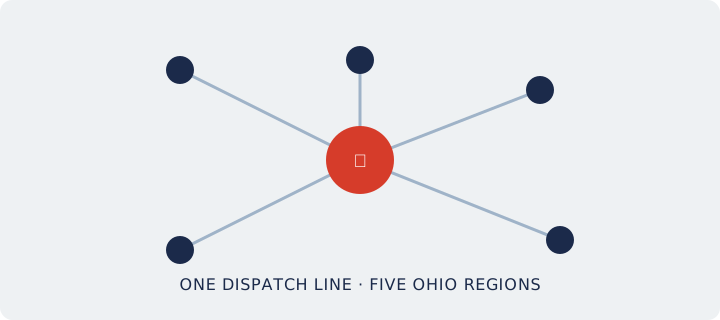
Honestly, less than you'd think — and less than a generic national cost guide might imply by ignoring the question entirely. ClearFlow runs a single shared dispatch line that routes callers to independent, licensed crews based on their location, so pricing reflects each individual crew's own local rates and availability rather than one fixed number set centrally. That said, here's how ClearFlow's 22 covered Ohio cities break down by region, since crews serving similar markets tend to see similar demand and labor cost patterns:
- Northwest Ohio
- Toledo, Lima
- Northeast Ohio
- Akron, Canton, Youngstown, Warren, Cleveland, Euclid, Strongsville, Solon, Hudson, Cuyahoga Falls
- Southwest Ohio
- Dayton, Cincinnati, Hamilton, Middletown, Oxford, West Chester, Springfield
- North Central Ohio
- Mansfield, Lorain
- East Central Ohio
- Zanesville
Densely populated metro markets — the Cleveland and Cincinnati areas in particular, given how many of ClearFlow's covered cities cluster around each — tend to have more restoration crews competing for the same jobs, which can work in a homeowner's favor on pricing and response time. Smaller markets like Zanesville or Mansfield may have fewer crews to choose from, which is exactly why ClearFlow's dispatch model exists: instead of a homeowner in a smaller city searching alone for who's actually available, one call routes to a crew already covering that area.
Timing affects price more than geography does, too. Ohio sees predictable seasonal spikes in water damage calls — spring thaw and heavy spring rain, and summer storms that knock out sump pumps during power outages — and crews across every one of these regions tend to run at higher demand during those windows. A basement flood in April, when every crew in Northeast Ohio is also fielding spring-thaw calls, can mean a longer wait for an available crew than the identical flood in October. None of this changes the underlying cost drivers above, but it's worth knowing that "how fast someone can get to you" often moves more than "what they charge once they arrive."
Does Homeowners Insurance Cover the Cost?
Often, yes, provided the cause of damage is "sudden and accidental" rather than gradual — a burst pipe or an overflowing appliance is typically covered under a standard HO-3 policy, while long-term seepage from a slow, ongoing leak or ground-water flooding usually is not, and requires separate flood insurance instead. This is the single most common point of confusion homeowners run into, and it's worth understanding before you're mid-crisis and trying to read your policy for the first time. For a full breakdown of what's covered, what isn't, and what to do if your insurer denies a claim you believe should be covered, see ClearFlow's dedicated guide on Ohio insurance coverage for flooded basements.
How to Get an Accurate Quote for Your Home
Every figure on this page is a realistic range, not a quote for your specific situation — actual pricing depends on the crew assessing your property, the true extent of the damage, and your local market. The fastest way to get a real number is a direct assessment: call ClearFlow's dispatch line, describe what's happening, and you'll be connected to a licensed, IICRC-certified crew serving your area who can give you an actual on-site estimate, often the same day for active water damage. There's no cost or obligation to make that call — it's simply the fastest way to go from "I don't know what this will cost" to a real answer from someone standing in the room.
Once a crew is on-site, a legitimate quote should be itemized rather than a single lump number — extraction, equipment rental days, any material replacement, and labor listed separately, so you can see exactly what you're paying for and compare it against a second opinion if you want one. It's also worth asking two questions up front, before work starts: whether the crew bills your insurance directly or expects payment from you first, and whether their estimate follows IICRC S500 drying standards, which matters if you ever need to show an adjuster that the work met an accepted industry benchmark rather than a crew's own judgment call.
Want an actual number instead of a range? Call ClearFlow's dispatch line and get connected to a licensed, IICRC-certified crew serving your part of Ohio for a real on-site estimate.
📞 Call (419) 588-0112Frequently Asked Questions
Is water damage restoration always covered by homeowners insurance?
No. Coverage generally depends on whether the cause was sudden and accidental (a burst pipe, an appliance failure) versus gradual (a slow leak that went unnoticed for weeks or months) or flood-related (water entering from outside the home), which typically requires separate flood insurance. Check your specific policy language, since this is where most claim disputes start.
How much does it typically cost to dry out a flooded basement?
A fully flooded basement typically runs $4,000 to $10,000 or more, depending on square footage, how long the water sat before crews arrived, and whether material replacement (drywall, insulation, flooring) is needed in addition to extraction and drying.
Does mold remediation cost extra on top of water damage restoration?
Yes, mold remediation is typically billed separately from water extraction and drying, and it becomes a real risk once water has sat for more than 24 to 48 hours. This is the main reason speed matters so much — catching water damage early often avoids the mold cost altogether.
How fast do I need to start drying to avoid mold setting in?
Most restoration standards point to a 24-to-48-hour window before mold growth becomes a meaningful risk in wet materials. The faster professional extraction and drying equipment gets on site, the better your odds of avoiding that additional cost entirely.
Why do restoration quotes vary so much between companies?
Because pricing reflects a specific crew's equipment, labor availability, and local market conditions, not a fixed industry rate. Two homes with identical damage in different parts of Ohio can get genuinely different quotes for legitimate reasons — it's worth getting an actual on-site assessment rather than comparing rough phone estimates.
Is black water (Category 3) cleanup more expensive than a clean water leak?
Yes, meaningfully. Category 3 water requires more extensive material removal and stricter sanitation protocols, which typically runs $7.50 to $12+ per square foot versus $3.50 to $6 for Category 1 clean water damage.
Do I pay upfront, or does the crew bill insurance directly?
This varies by crew and by insurance company. Many restoration crews serving ClearFlow's network work directly with insurers on billing for covered claims, but arrangements differ, so it's worth asking directly when you first speak with the crew handling your job.